
At home and out and about
Practical ways to live more independently
Friendly, straightforward guidance on adapting your home, choosing mobility equipment and getting around. Begin with whatever is becoming difficult and take the choices one step at a time.
A good place to start
What would you like to make easier?

Looking at everyday life
A useful assessment covers more than one room
How someone transfers, balances, reaches controls and moves through the rest of the home can completely change which option will work. This is why the first product suggested is not always the best answer.
You can ask your local council for a free home assessment. An occupational therapist can look at the tasks causing difficulty and talk through changes that might help.
How to arrange a home assessmentClear answers to practical questions
Popular Easier Ways guides
Would a stairlift work in your home?
A practical UK guide to deciding whether a stairlift will suit the user, the staircase and the way the household uses the home.
Read moreCould a through-floor lift be fitted in your house?
A practical explanation of space, structure, access and safety when considering a through-floor lift in an ordinary UK home.
Read moreWhat makes a bathroom really easier to use?
Plan a bathroom adaptation around transfers, washing, toilet access, floor grip, controls and the person who will use it.
Read moreHow do you choose a mobility scooter?
Choose a mobility scooter by looking at routes, storage, charging, transport, controls and the user's ability rather than appearance alone.
Read moreWould a wheelchair-accessible vehicle suit you?
Understand ramps, lifts, seating positions, restraints, headroom and test journeys before choosing a wheelchair-accessible vehicle.
Read moreCould a Disabled Facilities Grant help with adaptations?
What Disabled Facilities Grants may cover, who applies, why assessment comes first and what to check before starting work.
Read moreGetting out and about
Think through the whole journey
A scooter needs somewhere safe to live, a wheelchair has to turn through the hall and a boot hoist must fit the car. Our guides look at these everyday details as well as the equipment itself.
Explore getting around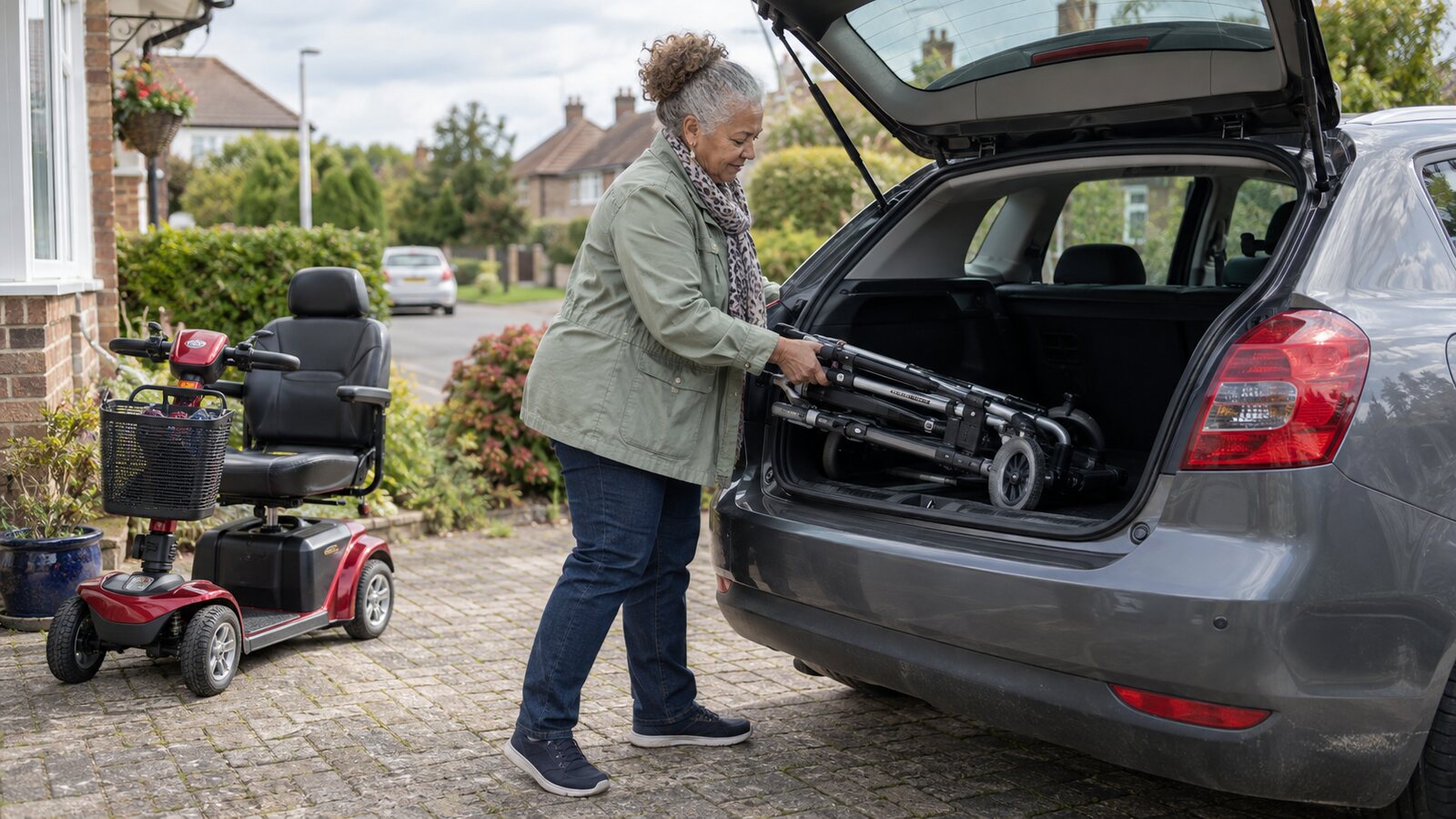
How Easier Ways can help
We provide clear, independent information and do not make, sell or install mobility equipment. If you ask for help, we can suggest useful questions or the sort of assessment or specialist that may be suitable. With your agreement, we may also help you contact an independent provider. Any decision to use that provider remains yours.
More about Easier Ways